Narrow Living Room Solutions
Turning awkward "bowling alley" spaces into functional, inviting zones through smart furniture placement and spatial prioritization.
Circulation Score
Efficiency Rating
Detailed Comparison Summary
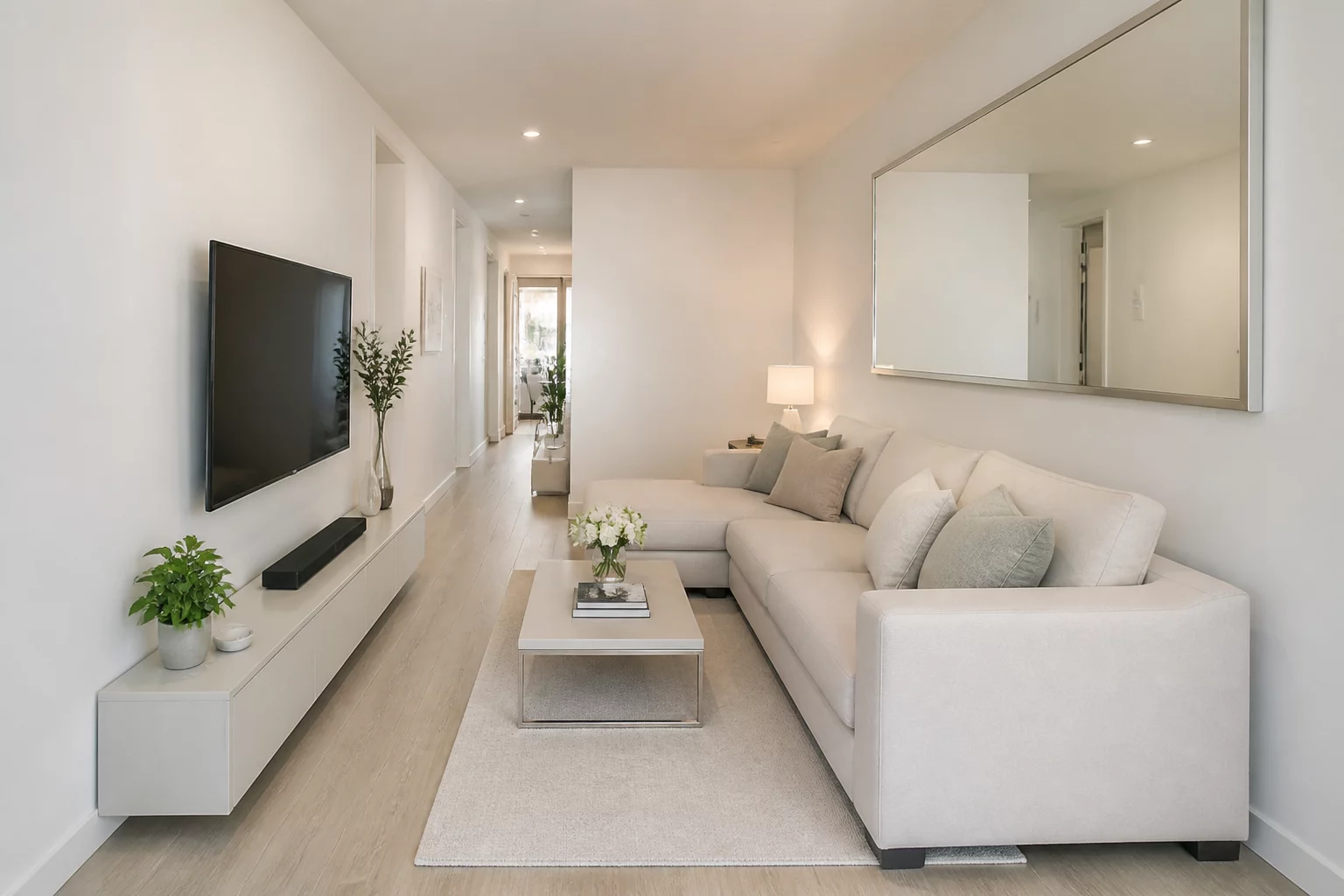
Long, narrow living rooms present a common architectural challenge: the "tunnel effect." When a room is significantly longer than it is wide, standard furniture arrangements often lead to cramped walkways or isolated seating. This guide compares two primary strategies for reclaiming balance. One focuses on a Linear Corridor layout to prioritize traffic flow, while the Zoned Anchor approach breaks the room into multi-functional chapters to make the space feel wider and more intimate.
Core Planning Priorities
Clear Path vs. Seating Depth
Finding the balance between a comfortable 40-inch deep sofa and the essential 36-inch clear walkway needed for easy movement.
Visual Width vs. Storage Utility
Deciding between open walls to create the illusion of width or floor-to-ceiling shelving that provides critical storage but adds bulk.
The Linear Flow Arrangement
In this scenario, all major furniture elements are placed against one long wall. This creates a dedicated, straight path for traffic on the opposite side. It is the most effective solution for rooms under 10 feet wide.
- Pros: Maximizes floor space; ensures no one walks in front of the TV.
- Cons: Can feel like a hallway if furniture is too dark or heavy.
Using low-profile, light-colored furniture helps the eye travel along the length of the room without being stopped by visual blocks, making the space feel airy and organized.
The Zoned Anchor Strategy
Instead of treating the room as one unit, this plan divides it into two distinct areas—such as a primary seating zone and a smaller reading or desk nook—using rugs and lighting to define the boundaries.
- Pros: Breaks the "bowling alley" feel; adds multi-functional value.
- Cons: Requires very careful measurements to avoid furniture collisions.
By placing a rug in the center to anchor the main seating area, the brain perceives the room as a series of cozy spaces rather than one long, overwhelming corridor.