Home Office vs Guest Room
Balancing daily productivity workspace needs with occasional overnight guest hosting in limited residential square footage.
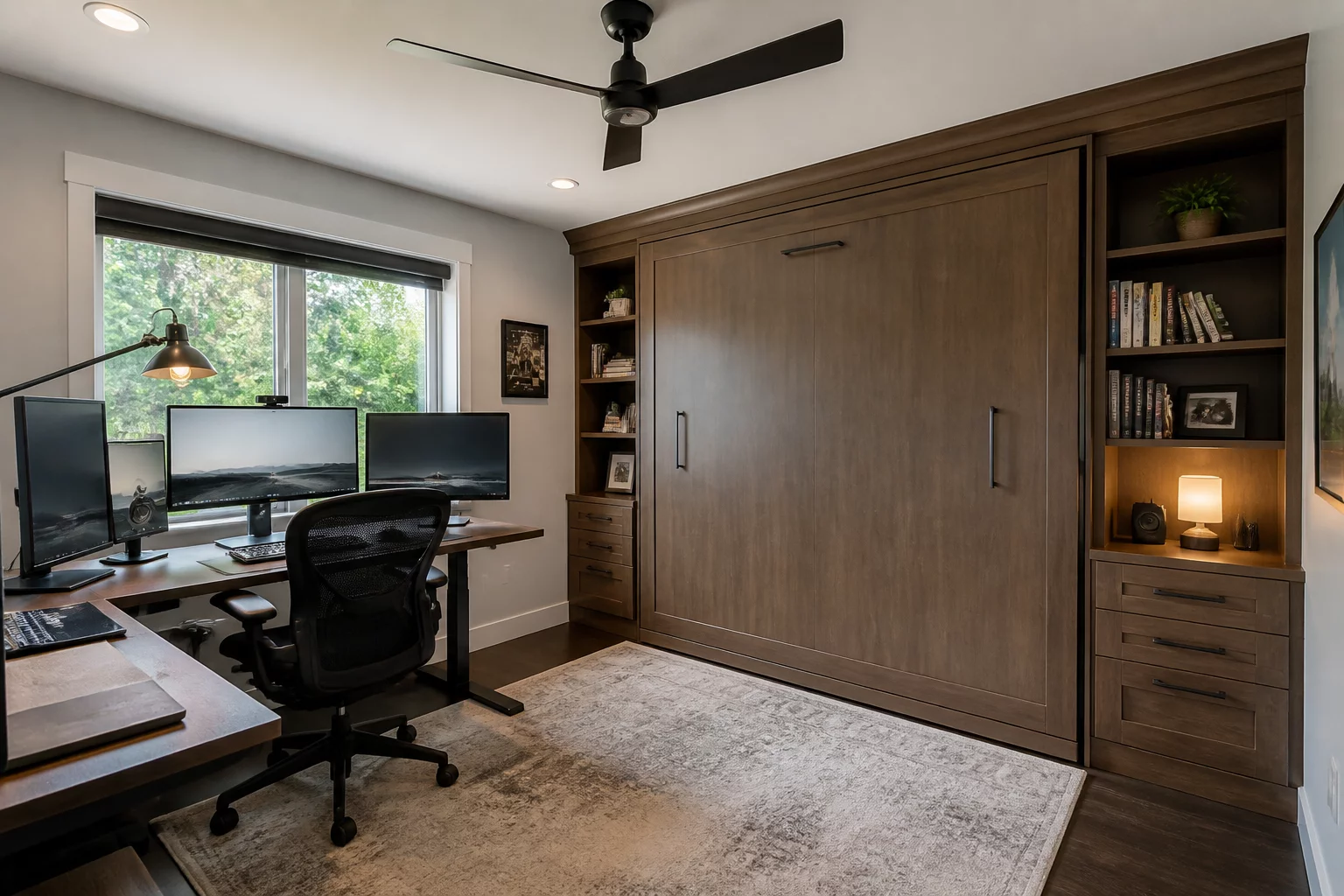
The Core Conflict
Working from home demands a quiet, ergonomic space, while hosting visitors requires a comfortable sleeping area. This conflict often forces homeowners to choose between a highly productive daily office and an inviting, occasionally used guest room. When a single room must serve both purposes, the physical footprint of a standard bed directly limits desk placement and movement clearance.
The Spatial Trade-Off
A standard desk setup takes up about 15 to 20 square feet of floor space. A queen-sized bed, by comparison, requires at least 35 square feet, not including the additional two feet of clearance needed on either side for comfortable movement. Placing these two elements in a typical 10x12 foot room leaves almost no circulation space, turning a daily work environment into a cramped, stressful zone.
Prioritizing the home office means designing for daily activities. In this layout, ergonomics takes center stage with a spacious desk, an adjustable chair, and dedicated storage for documents. Guests in this scenario must sleep on a folding cot or a pull-out sofa, which offers less comfort than a traditional bed. Conversely, prioritizing the guest room places visitors' comfort first. The bed dominates the room, forcing the desk into a corner or a closet, which hampers productivity and limits screen setup options.
Hybrid Design Strategies
Resolving this conflict requires flexible furniture solutions that adapt to changing needs. Homeowners often install a Murphy bed, which folds into the wall when not in use. This mechanism frees up valuable floor space during the workweek, allowing a full-size desk and chair to sit comfortably in the center of the room. Another option is a high-quality daybed with trundle features, which serves as a comfortable couch for reading during the day and transforms into a sleeping surface at night.
Option A: Dedicated Home Office
Maximizes daily ergonomic comfort, screen real estate, storage, and video call privacy, but leaves the room mostly empty or unusable for visitors.
Option B: Dedicated Guest Room
Provides a welcoming, comfortable environment for friends and family with a permanent queen bed and storage, but wastes prime square footage during workdays.
Priority Recommendation
For rooms used for work more than 80% of the year, prioritize the office layout but integrate a space-saving Murphy bed or a daybed. Only dedicate the room to guests if hosting occurs frequently enough to justify losing daily workspace efficiency.
Need Professional Consultation?
Contact our spatial analysts to review your specific floor plan trade-offs.
Contact Us