Shared Kids Bedroom Plans
Optimizing floor space for siblings requires balancing sleeping capacity with essential play zones and personal storage.
Circulation Score
Efficiency Rating
Detailed Comparison Summary
Designing a shared bedroom for children involves more than just fitting two beds into a single room. It is an exercise in choreographing a space where sleeping, studying, and active play do not constantly collide. The primary conflict in small footprints is the competition between furniture volume and the 'active floor area'. When the floor becomes a primary play zone, every square foot occupied by a bed leg matters.
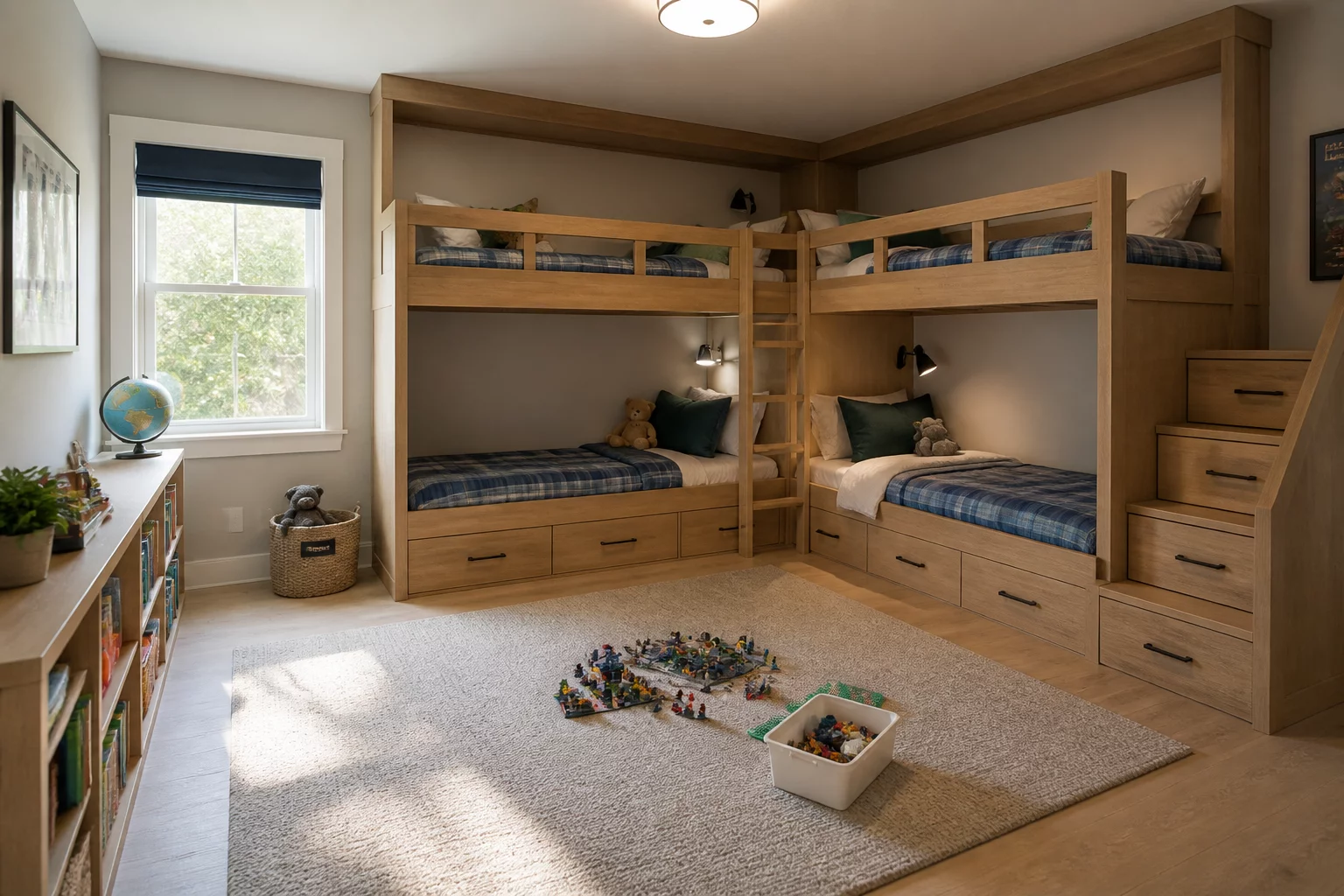
We compare two distinct strategies: the custom L-shaped bunk bed and the traditional parallel twin configuration. The L-shaped bunk concentrates all sleeping verticality in one corner, effectively freeing up the center of the room. In contrast, parallel twins offer a sense of symmetry and individual autonomy, which is often preferred by older children, even if it leaves less space for communal play mats or large toys.
Core Planning Priorities
Vertical Density vs. Floor Flow
Bunk beds utilize vertical space to preserve floor flow, essential for high-energy play zones.
Individual Autonomy vs. Efficiency
Parallel beds provide equal access to lighting and storage but consume significant walking area.
Maximizing Play Real Estate
The L-shaped bunk bed is an architectural favorite for square rooms. By tucking the beds into a corner, you create a dedicated 'sleep zone' that occupies less than 25% of the total floor area. The upper bed sits perpendicular to the lower bed, often allowing for integrated shelving or a small reading nook underneath the overhang. This layout is superior for younger siblings who spend most of their time playing on the floor.
- Pros: Maximum central play space, integrated storage opportunities, unique sleeping aesthetic.
- Cons: Requires high ceilings, climbing can be a safety concern for very young kids.
Prioritizing Individual Space
Parallel twin beds are the gold standard for symmetry. This layout allows for two identical 'territories'—each bed can have its own nightstand, lamp, and rug. While this eats up more floor area, it simplifies traffic flow and makes bed-making significantly easier. It is best suited for older siblings who value autonomy and requires a wider room to maintain a 36-inch central walkway.
- Pros: Equal privacy, easier maintenance, adaptable for guests of all ages.
- Cons: Leaves minimal room for active play, can feel cramped in narrow bedrooms.